
Blogs
COORG ICONS: K M CHINNAPPA, FORMER MANAGING DIRECTOR OF TATA ELECTRIC AND DAUGHTER BRINDA SOMAYA, ARCHITECT

By P.T. Bopann
The late K.M. Chinnappa, the legendary managing director of Tata Electric Co, Mumbai, provided jobs to many Kodava youths.
Chinnappa is widely recognized as one of the key corporate mentors of Ratan Tata during the latter’s formative years within the Tata Group.
Under Chinnappa’s management, Tata Electric (now Tata Power) became a benchmark for utility management and power stability in India. He was known for his calm leadership during massive industrial crises, such as managing grid restorations during major power outages across Maharashtra.
Chinnappa Uncle (Kuppanda) had hired me in his company Tata Electric, where I worked for little over a year at India’s first 500 MW thermal project at Trombay in Mumbai.
In gratitude, I dedicated my book Rise and Fall of the Coorg State, to Chinnappa Uncle. The book deals with the wiping out of the erstwhile Coorg State and its merger with Karnataka in 1956, following the reorganisation of states.
Chinnappa Uncle’s daughter, Brinda Somaya (in picture), is an internationally renowned architect and conservationist. She put together the book ‘Silent Sentinels – Traditional architecture of Coorg’.
She heads Somaya & Kalappa, a Mumbai-based company. She is married to Dr Anand Somaya, a cardiac surgeon. She did her Master’s from Smith College in Northampton, Massachusetts, USA. Brinda was the recipient of an honorary doctorate from her alma mater, Smith College. Her sister Ranjini Kalappa too is an architect.
Brinda has merged architecture, conservation and social equity in projects ranging from institutional campuses and rehabilitation of an earthquake-torn village to the restoration of an 18th-century Cathedral, showing that progress and history need not be at odds.
Some of the award-winning campuses built by Brinda, include Tata Consultancy Services, Banyan Park, Mumbai; Nalanda International School, Vadodara; and Zensar Technologies, Pune.
Brinda’s book ‘Silent Sentinels – Traditional architecture of Coorg’, published in 2005, explains the traditional buildings of Coorg.
The book documents three major building types of Coorg architecture: the ainemane, the temple, and the independent house. In addition to providing a record of a distinctive architectural tradition, the book attempts to inculcate a fuller understanding the appreciation of the values, beliefs, and practices that shaped it.
Brinda’s well-produced coffee table book on Coorg architecture has been out of print for many years. I donated my copy of the book presented to me by Brinda to the Cauvery College Library, Gonikoppal.
Paperback copy of my book dedicated to Chinnappa Uncle is available on Amazon:
Images


AUTHOR OF ‘FEATHERED JEWELS OF COORG’ AND HIS HAND-PAINTED CARDS TO MARK WILDLIFE WEEK
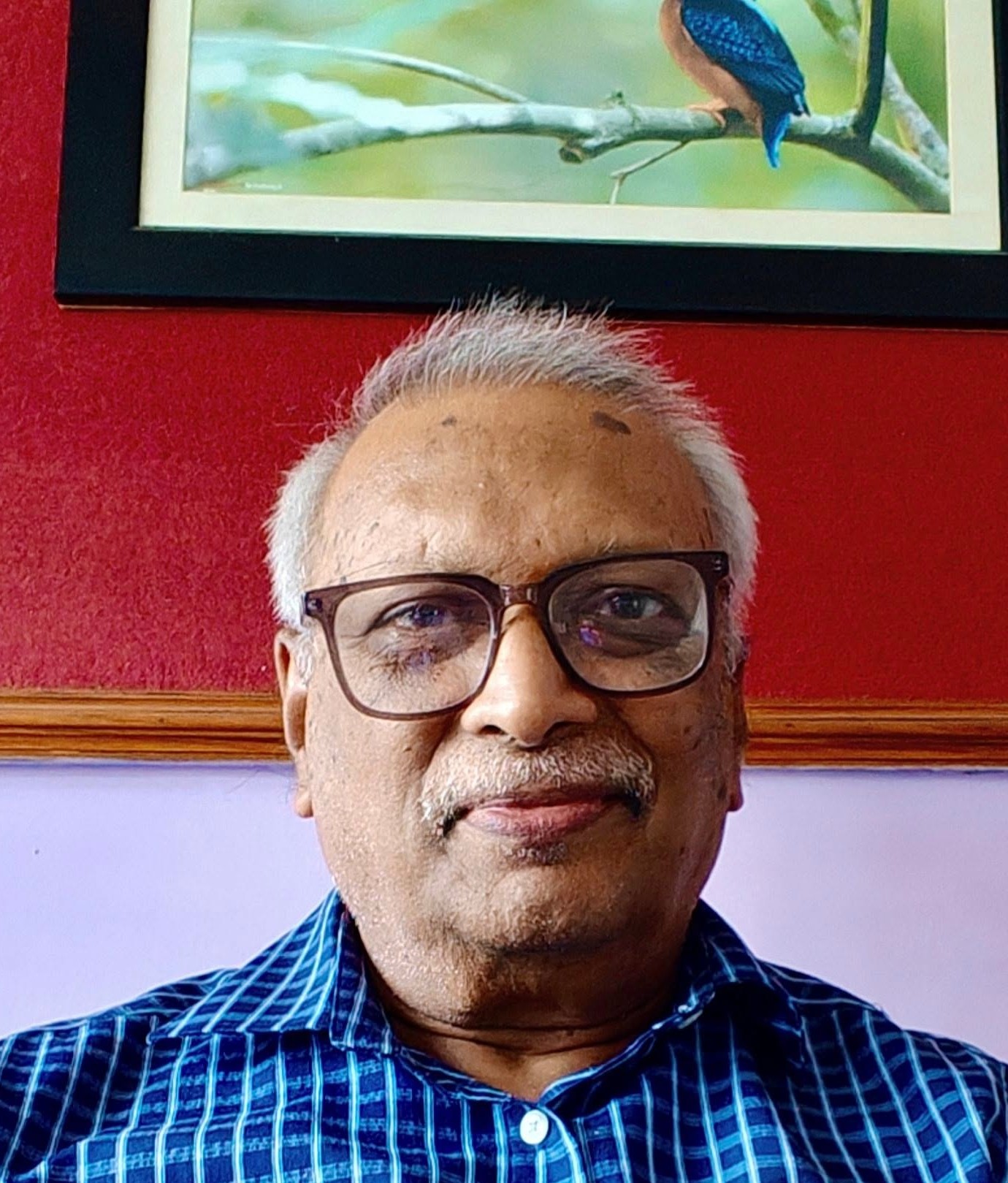
By P.T. Bopanna I was pleasantly surprised to receive hand-painted cards featuring birds from Dr S.V. Narasimhan (in picture), well-known […]

FIRST GENETIC STUDY: FOREWORD TO THE BOOK ‘WHO ARE THE KODAVAS (COORGS)?’
Curtain-raiser: Deepika Cariappa (in picture), Bengaluru bureau chief of The Hindu newspaper, has written the foreword to my book ‘Who […]

COORG-BORN TEENAGER ATIRA CHENDIRA PUBLISHES HER DEBUT NOVEL ‘THE AGE OF ALMOST’
By P.T. Bopanna Coorg-born 13-year-old Atira Chendira (in picture), has published her debut novel The Age of Almost. Atira believes […]